

Best Time to See Elephants in Uganda
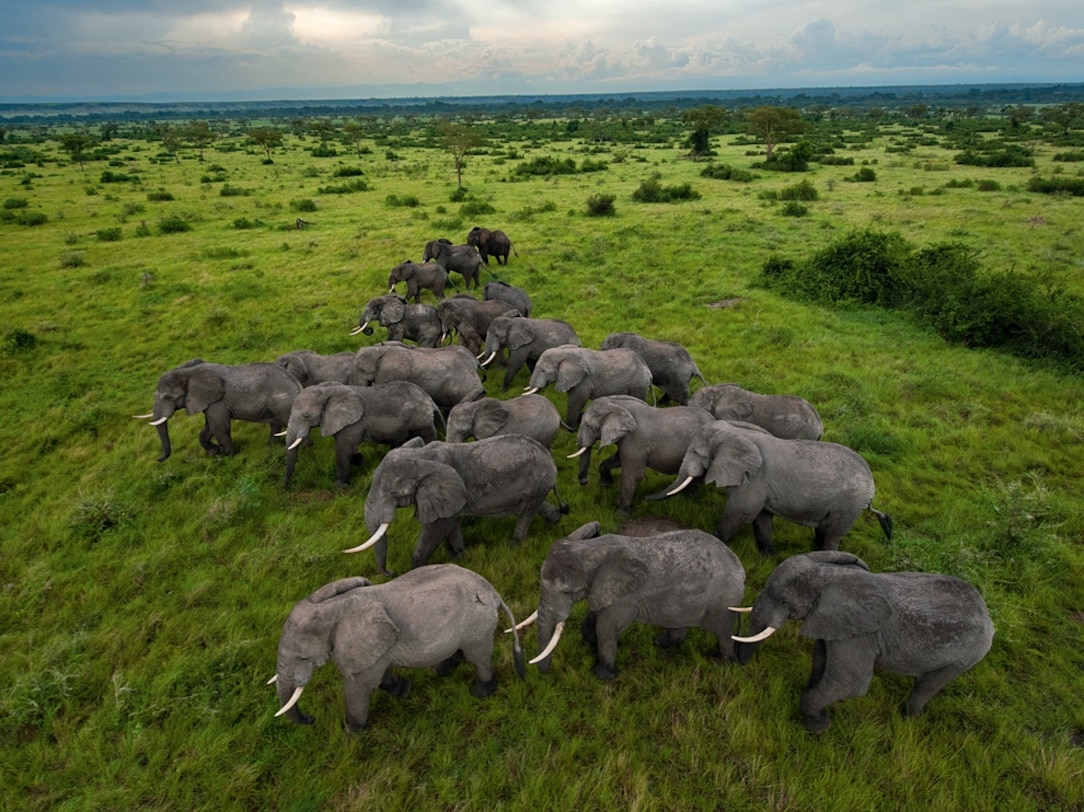
There are moments in Africa when the earth seems to move before you even understand why. The grass shifts. Birds lift into the sky. And then, slowly, powerfully, they appear — a herd of African elephants walking across the golden plains of Queen Elizabeth National Park.
These are not just animals. They are the giants of Uganda’s wilderness. Watching them in their natural habitat is not only a safari highlight; it is a deeply moving encounter with one of nature’s most intelligent and majestic species.
The Majesty of Uganda’s Elephants
Queen Elizabeth National Park is home to one of the largest elephant populations in Uganda. These African savannah elephants roam freely across open grasslands, acacia woodlands, crater lakes, and along the famous Kazinga Channel. Seeing them here feels raw and authentic — no fences, no barriers, just wild Africa unfolding before your eyes.
An adult bull can weigh up to 6,000 kilograms. Their tusks curve like ivory crescents against the sky. Yet despite their immense size, elephants are gentle and socially complex. They live in matriarchal herds led by an experienced female who guides the family to water and safety. Watching a matriarch pause, lift her trunk to test the wind, and confidently lead her herd forward is witnessing leadership in its purest form.
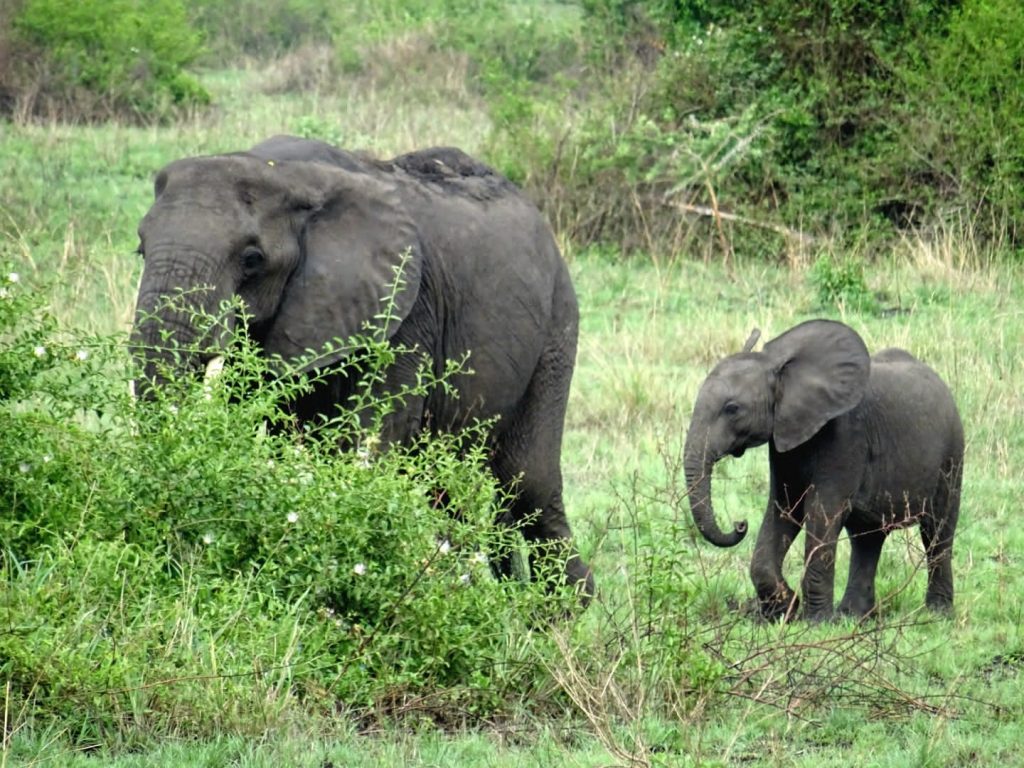
Calves often walk protected between adults, occasionally stumbling as they learn to navigate the terrain. You may see teenagers playfully pushing one another, or mothers shielding newborns beneath their bellies. These are intimate family scenes rarely forgotten by visitors.
Why Queen Elizabeth National Park Is Exceptional for Elephant Viewing
What makes Queen Elizabeth National Park particularly special is its diverse ecosystem. The park stretches from open savannah to wetlands, forests, and volcanic craters. This diversity means elephants are often visible in different settings, offering varied and dramatic viewing opportunities.
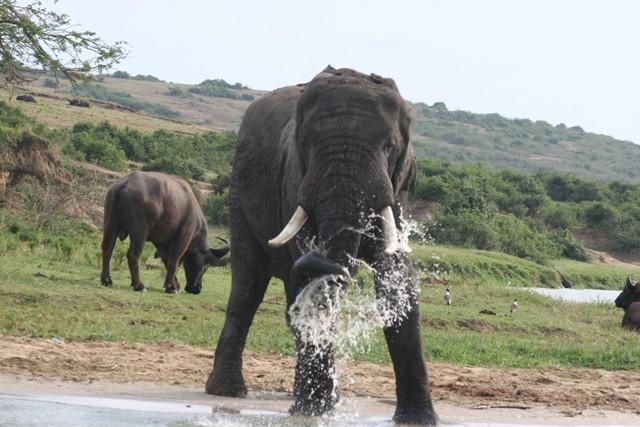
One of the most remarkable places to observe elephants is along the Kazinga Channel, a natural waterway that connects Lake George and Lake Edward. During boat cruises, elephants frequently gather at the shoreline to drink, bathe, and cool off. From the water, you can watch them up close as they spray themselves, interact with hippos nearby, and move gracefully through the shallows. It is one of the most photogenic and peaceful wildlife experiences in Uganda.
Game drives across the Kasenyi Plains also provide outstanding sightings. Here, herds may be seen crossing dusty tracks at sunrise or silhouetted against fiery sunsets. The landscape is open, which makes it easier to spot large groups moving together.
Best Time to Visit Uganda to See Elephants
Although elephants can be seen year-round in Uganda, certain seasons provide better conditions for wildlife viewing.
Dry Seasons (Best Overall)
- June to September
- December to February
These months are widely considered the best time to visit Queen Elizabeth National Park for elephant sightings. During the dry season, vegetation is thinner and water sources become more limited. As a result, elephants gather near rivers, lakes, and the Kazinga Channel, making them easier to locate.
Road conditions are also better in dry months, allowing smoother game drives and access to remote areas of the park. Photographers particularly love this season because the light is clear, skies are dramatic, and wildlife congregates predictably.
If your primary goal is to see large herds in open landscapes and along the water’s edge, the dry season is ideal.
Wet Seasons (Lush and Dramatic)
- March to May
- October to November
During the rainy seasons, the park transforms into a vibrant green paradise. While elephants remain present, they may disperse more widely due to abundant water and food sources. This can make sightings slightly less predictable.
However, the scenery is breathtaking. Storm clouds gather over crater lakes, and the plains become emerald carpets. For visitors who value dramatic landscapes, fewer tourists, and a more intimate safari atmosphere, the wet season has its own magic.
A Transformative Encounter
Standing just meters away from a wild elephant is humbling. The silence between you feels sacred. You become aware of your own smallness — and yet, also your connection to something ancient and powerful.
Elephants communicate through low-frequency sounds that humans cannot hear. They sense vibrations through the ground. They remember places and pathways across vast territories. Some scientists believe they even mourn their dead.
In Queen Elizabeth National Park, these giants walk freely as they have for generations. Responsible tourism and conservation efforts in Uganda have helped protect their populations, ensuring that future travelers will continue to witness these magnificent creatures.
Planning Your Visit
For the best experience:
- Choose the dry season if elephant sightings are your top priority.
- Include a Kazinga Channel boat cruise in your itinerary.
- Opt for early morning or late afternoon game drives when elephants are most active.
- Travel with knowledgeable guides who understand elephant behavior and movement patterns.
Whether you visit in the golden light of July or the lush green months of April, Queen Elizabeth National Park offers an unforgettable opportunity to meet the giants of Uganda’s wilderness.
To see elephants here is not just to observe wildlife — it is to stand in the presence of ancient wisdom, family devotion, and untamed beauty. And once you have witnessed them walking across the African plains, something inside you changes forever.